

SoilOS
A personal lawn-care planning app framed through market research, seasonal planning, budget tracking, and product thinking.
Built with Next.js, TypeScript, local weather data, soil data, planning dashboards
Overview
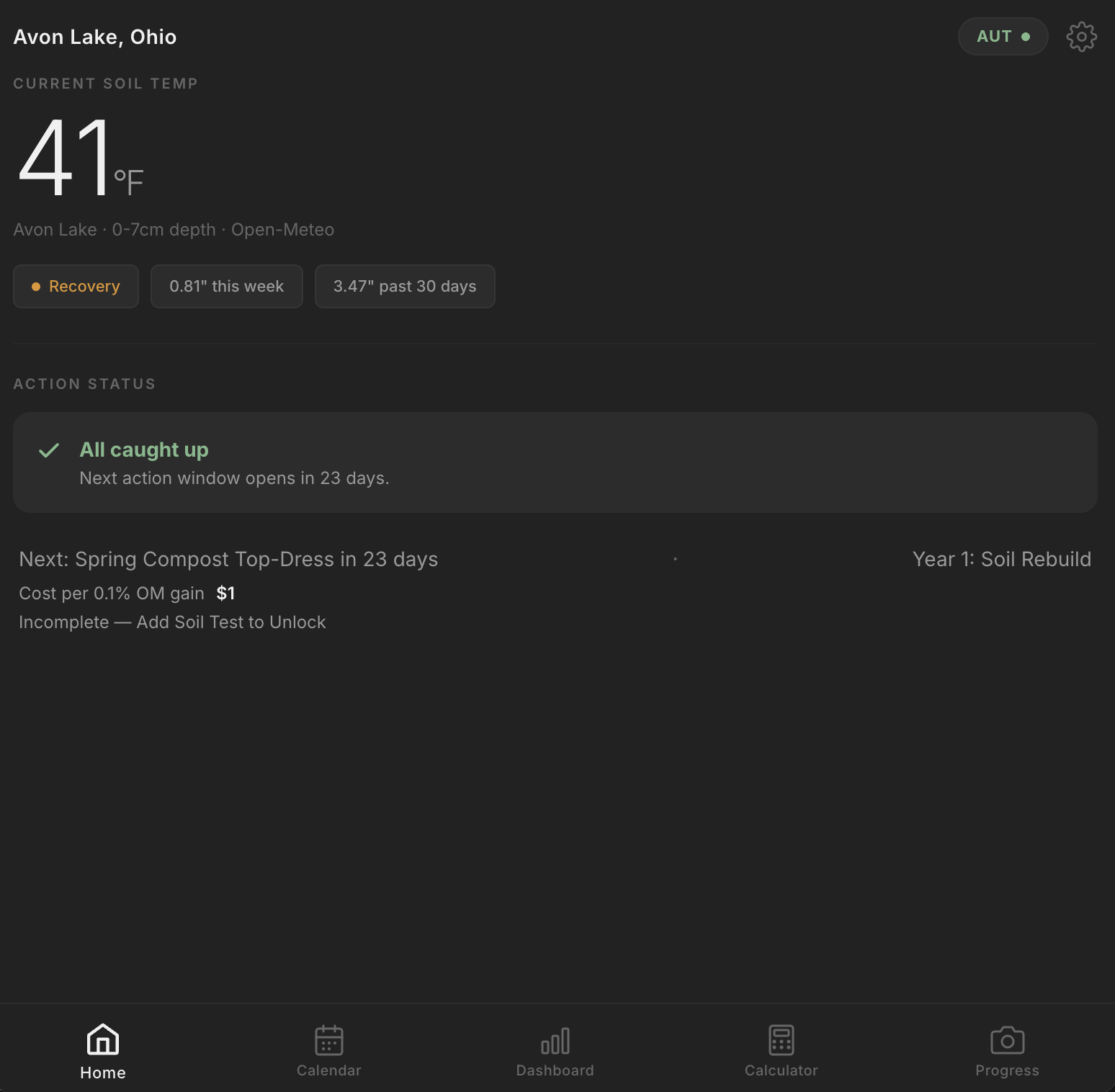
SoilOS is a personal lawn-care planning app using local weather, soil data, seasonal tasks, budget tracking, and progress photos to support a practical multi-year plan. It turns a messy home-maintenance problem into a planning surface: what should happen next, why now, what it costs, and how the plan changes across seasons.
The app is demoed here through real screenshots instead of a live link because the working product is auth-gated. That keeps the portfolio story honest while still showing the product model, research decisions, and day-to-day utility behind the project.
Why I Built It
I wanted a more deliberate way to improve a lawn over multiple seasons without relying on scattered notes, store advice, and one-off reminders. Lawn care looks simple from the outside, but the useful decisions depend on timing, soil conditions, weather windows, product math, and budget tolerance.
SoilOS became a focused personal utility: research the market, compare common approaches, and build a small system that helps me choose a plan I can actually follow.
Product Decisions
The market research pointed to a gap between generic lawn-care calendars and high-touch paid services. I wanted something in the middle: practical enough for one homeowner, but structured enough to explain why a task belonged on the calendar.
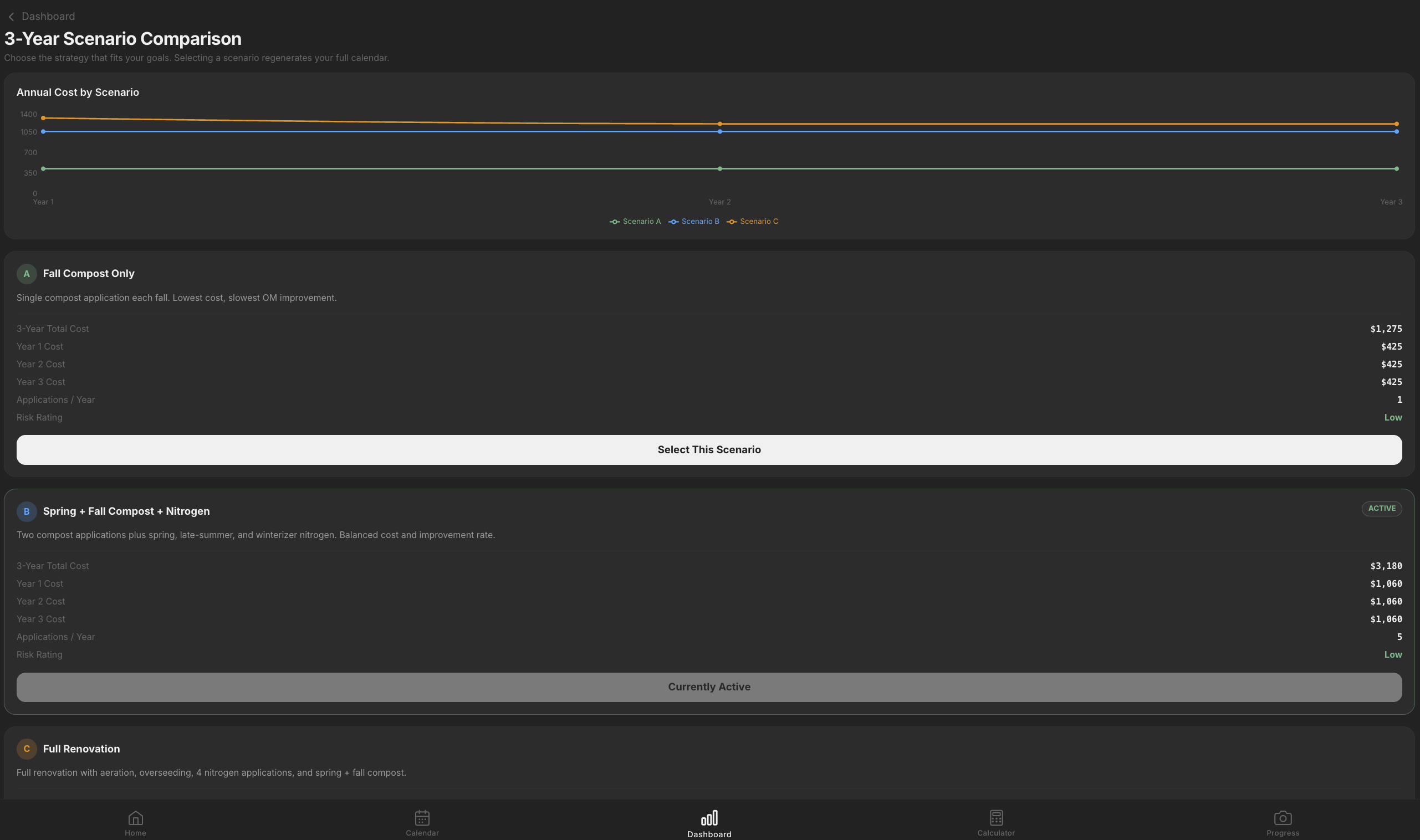
The core product decision was making scenario comparison the starting point. Instead of jumping straight into tasks, SoilOS compares multi-year strategies by annual cost, application count, expected improvement pace, and budget and risk tradeoffs. Choosing a scenario then shapes the calendar.
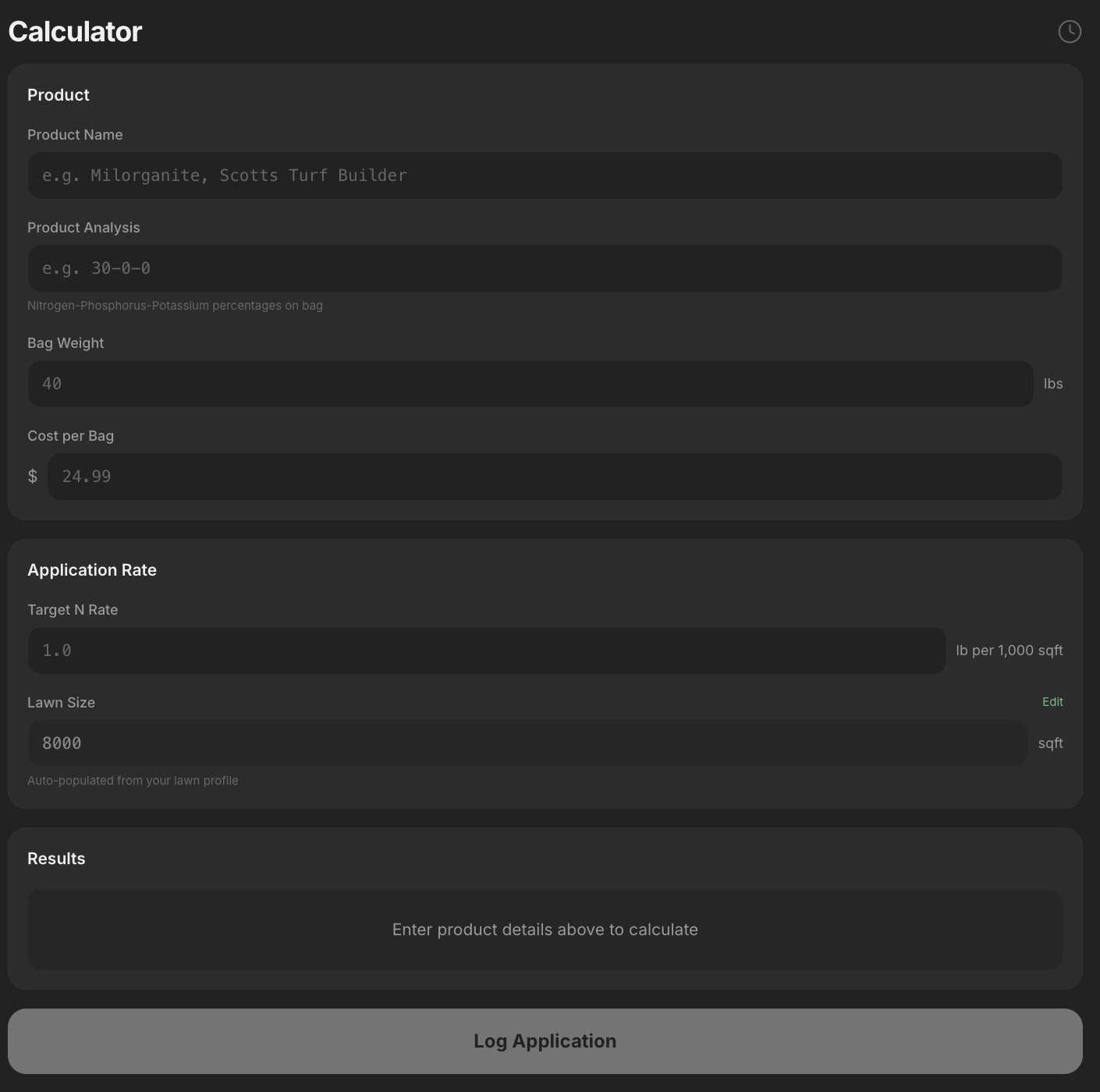
The product calculator supports another everyday decision: whether a specific bag, analysis, cost, and lawn size make sense before buying or applying it. That keeps the app grounded in real product labels rather than abstract recommendations.
Technical Approach
SoilOS is built with Next.js, TypeScript, local weather data, soil data, and planning dashboards. The app models the lawn as a profile with size, seasonal tasks, scenario assumptions, weather-sensitive timing, product inputs, budget tracking, and progress photos.
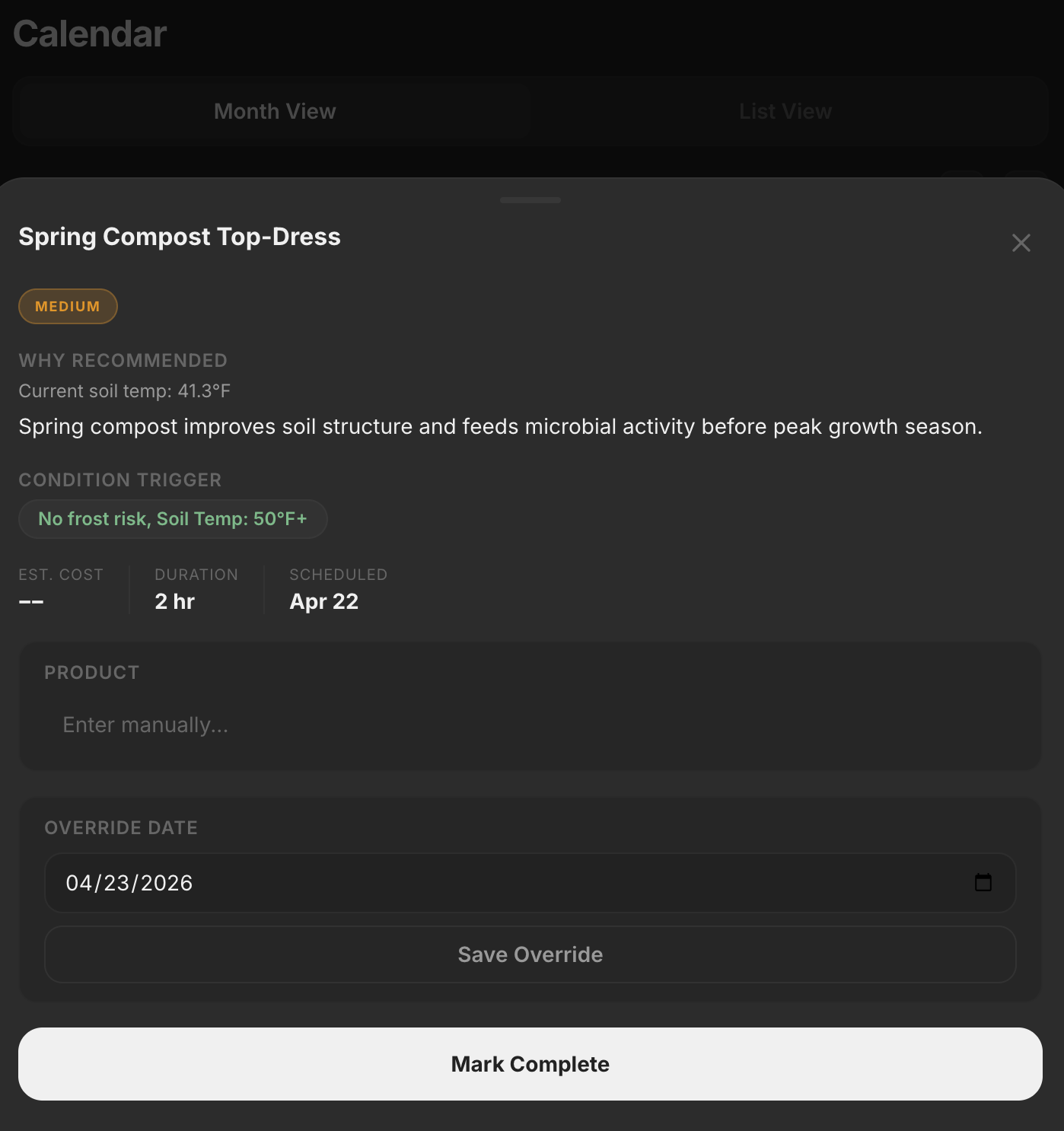
The planning model keeps recommendations explainable. Calendar tasks include a reason, condition trigger, estimated effort, scheduled date, and completion state. Scenario data keeps cost and application frequency visible so the user can understand the tradeoff before committing to a plan.
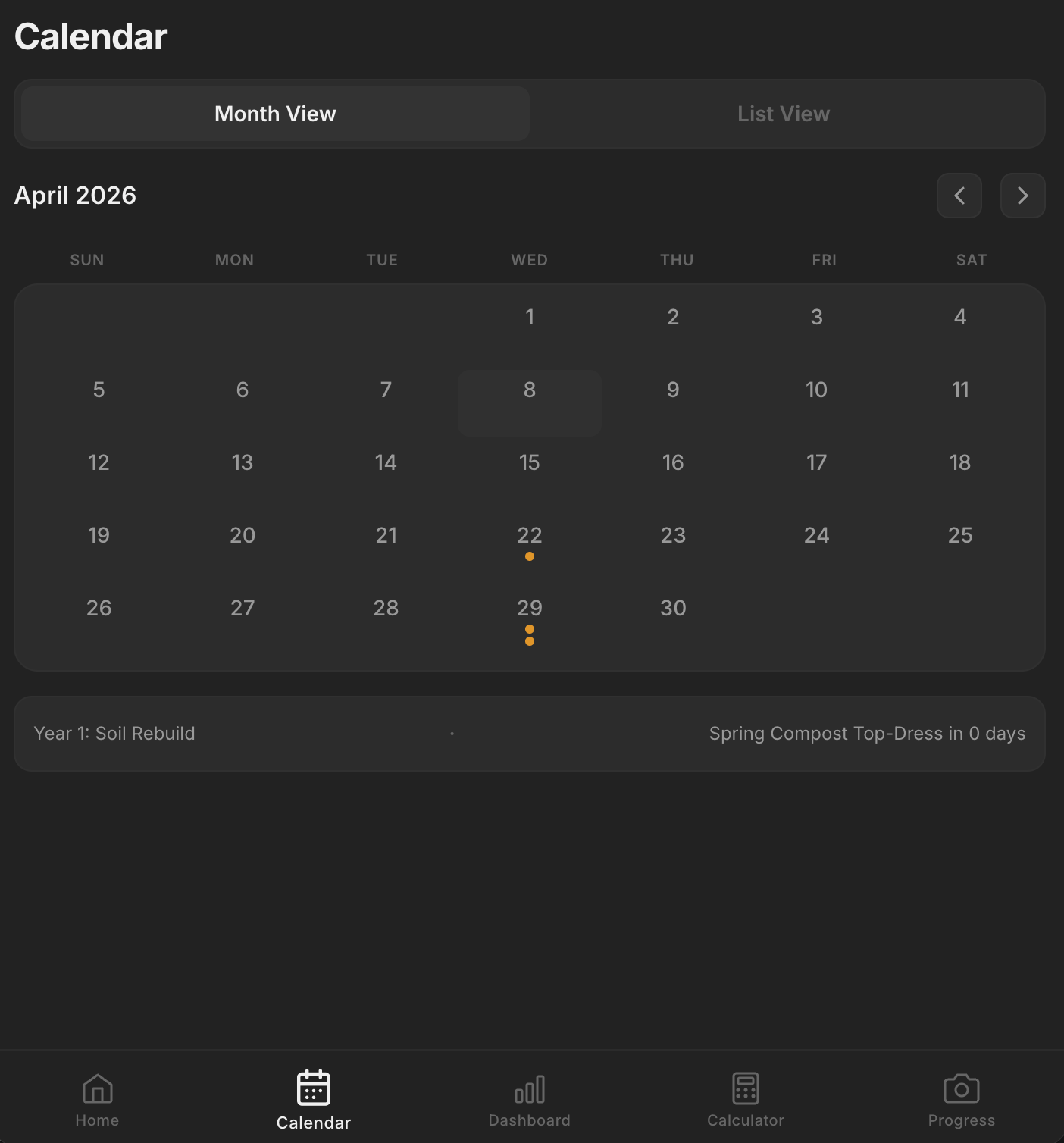
The detail views are intentionally practical: task sheets can override dates, record products, and mark work complete; calculator inputs translate product labels into application math; calendar views make the seasonal plan easier to follow.
What I Learned
The biggest lesson was that useful planning software needs opinionated constraints. A long list of possible lawn tasks is less helpful than a small number of choices tied to cost, timing, and conditions.
I also learned that personal utility apps still need product framing. The app became stronger when I treated market research, scenario design, and budget visibility as product requirements rather than extra context.
Screenshots
What I’d Do Next
The next version would make local condition data more useful after tasks are completed. I would connect progress photos, completed applications, and soil changes into a clearer before-and-after timeline.
After that, I would add better plan adjustment rules: reschedule around weather, surface skipped-task consequences, and make budget tracking easier to compare across years.